

Ingenuity
roamx-0201
NASA researchers are developing the future of flight on Mars, laying the groundwork for helicopters with the ability to fly higher and farther while conducting science on the Red Planet. Using high-fidelity computer simulations and wind tunnel tests, engineers are reimagining the rotorcraft blades that could carry the next generation of Mars flyers.
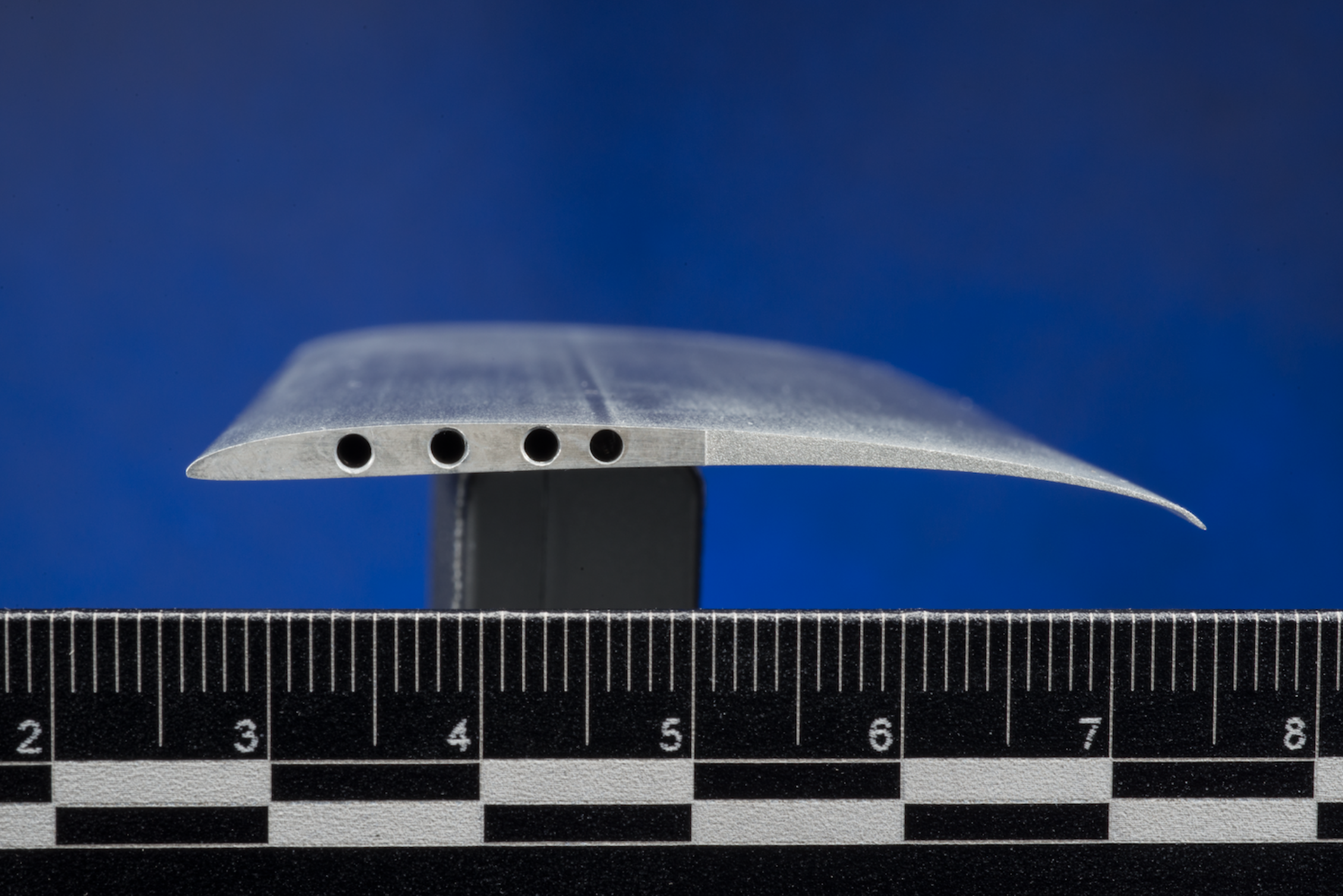
NASA’s Ingenuity helicopter made history as the first powered aircraft to fly on another planet. The SkyFall mission, scheduled for launch in 2028, builds on that legacy with a trio of helicopters destined for Mars exploration. Both missions utilize a blade designed to operate in Mars’ thin atmosphere, with a curved edge reminiscent of but distinct from blades used on Earth.
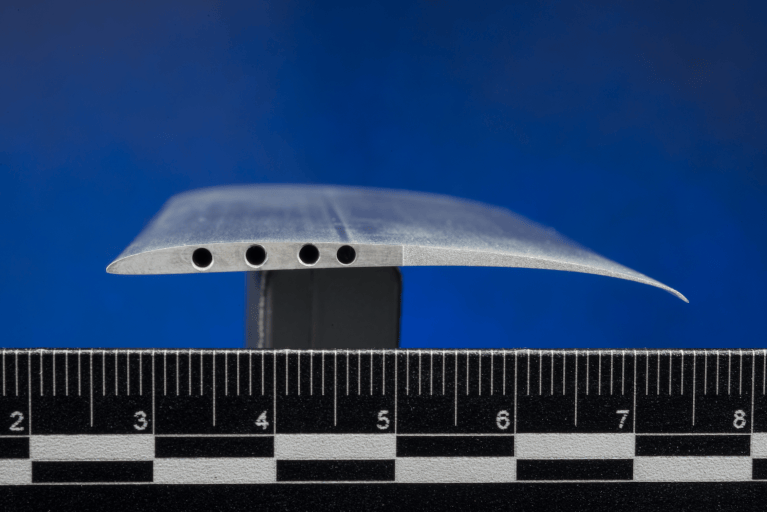
Researchers are exploring unconventional blade designs that are thinner and sharper, aiming to enable future missions after Skyfall to expand their single-flight range across Mars. One team at NASA’s Ames Research Center in California’s Silicon Valley is working with Imperial College London, United Kingdom, and Nagoya University, Japan, to test a new blade cross-section, or airfoil, that promises to significantly boost aerodynamic performance on Mars.
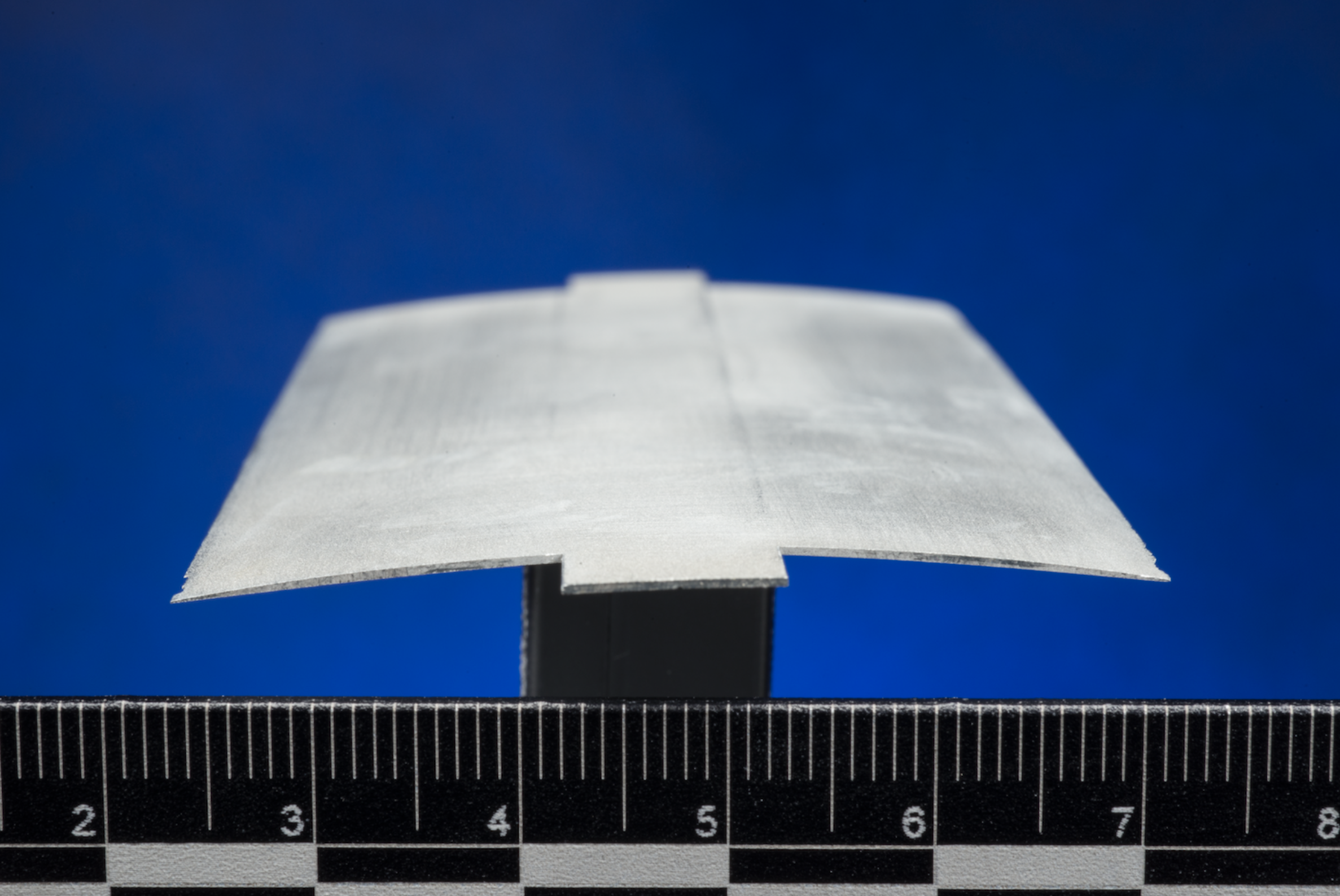
Researchers designed the new airfoil, called roamx-0201, using advanced simulations and algorithms tuned to Mars conditions, pointing researchers toward a thinner, asymmetrical shape. Subsequent wind tunnel tests showed that the optimized design boosted performance and was better able to recover in risky flight conditions.
Researchers used high-fidelity simulation tools to analyze the performance of the roamx-0201 airfoil and compare it to Ingenuity’s capacity. They found that the redesigned blades could enable future Mars helicopters to expand the distances that can be covered in one uninterrupted flight from Ingenuity’s 0.7 kilometers to as much as 18.7 kilometers while carrying scientific instruments. The findings were announced in a paper published Sept. 22 in the journal of the American Institute of Aeronautics and Astronautics.
The roamx‑0201 blades performed well in part because they were able to operate longer at higher speeds before experiencing a phenomenon known as “drag divergence”, where performance drops suddenly when the rotors approach the speed of sound, which is lower on Mars than on Earth.
The new blade also differs from earlier designs in how it uses turbulence to create lift. As air flows over a rotorcraft blade, it forms a thin region called the “boundary layer.” The new airfoil intentionally disrupts the flow of that boundary layer at the front of the airfoil directly at the leading edge to create a disturbance that, counterintuitively, pulls the blade upward to help lift the rotorcraft more effectively than with earlier designs.
Another challenge for rotorcraft is “stall,” an aerodynamic condition in which performance drops sharply and flight becomes unstable following a change in the angle of airflow. Ingenuity’s blades experienced steep performance degradation at stall, but under the conditions studied, the roamx-0201 design showed significantly improved stall behavior. That means future helicopters could operate safely at a wider range of flight angles.
While the technology is not yet ready for Mars, tests are helping engineers understand and resolve discrepancies between computational predictions and real-world performance. Ongoing research across NASA aims to enable more efficient Mars helicopters that can fly farther, carry more payload, and unlock new science and discovery missions.
Source: www.nasa.gov